Compliance
Customer due diligence, kept in one register.
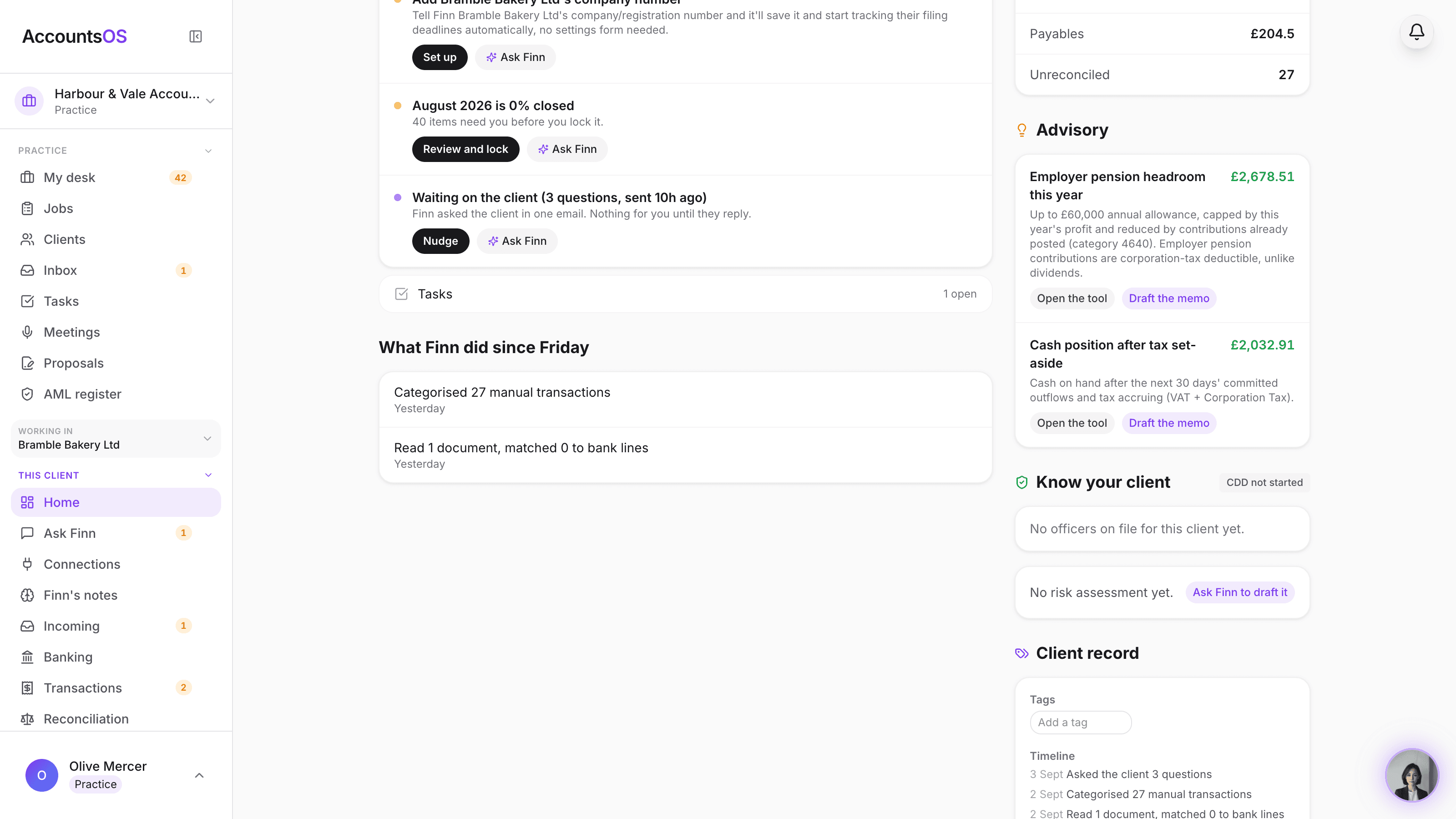
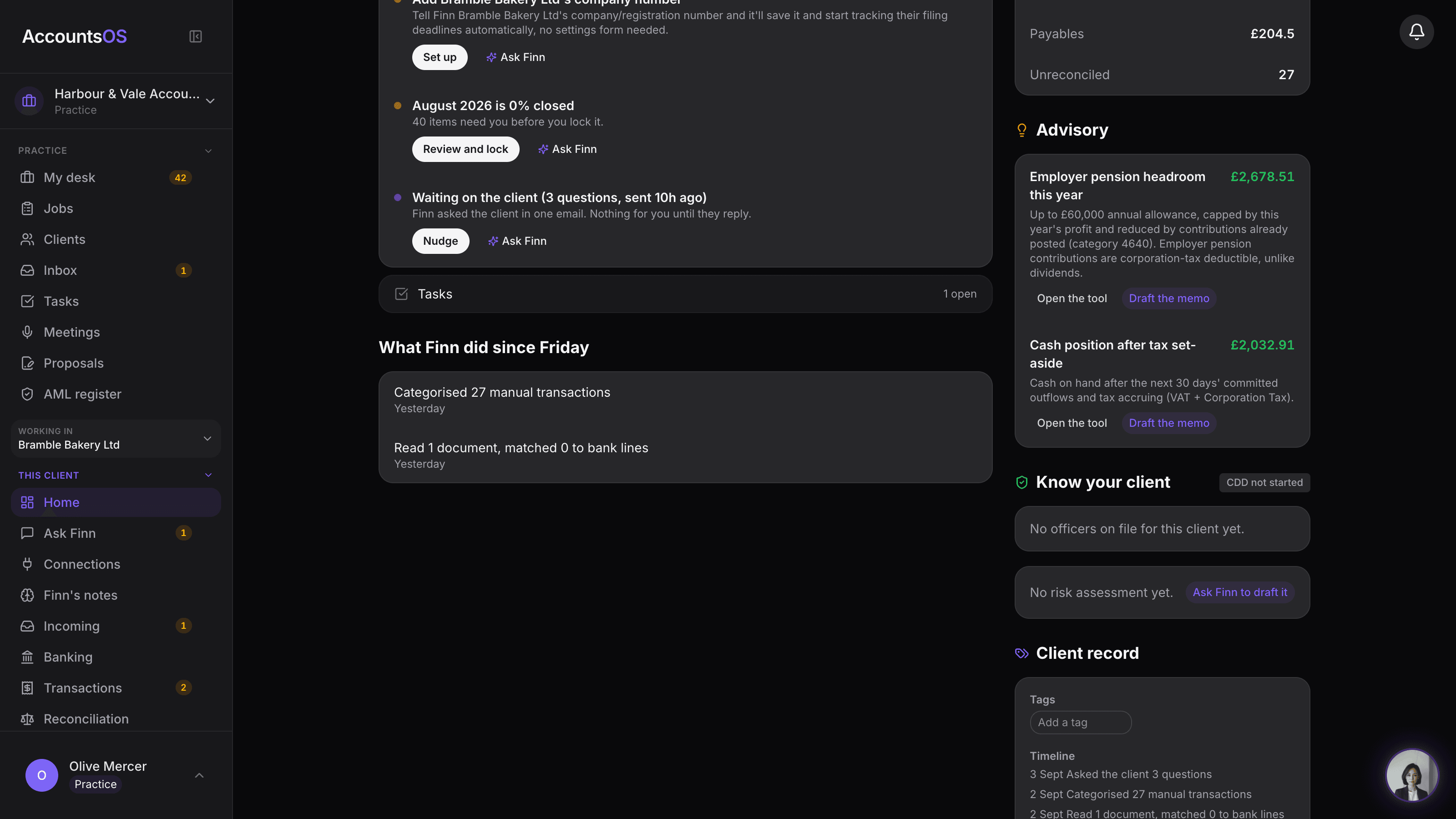
Every director on file, the checks you ran recorded with their evidence, and a risk assessment drafted for you to confirm. Expiring checks and register changes come back to your desk.
Optional
AccountsOS · Who needs checking, at a glance
How it works
AML and KYC, step by step
01
People listed for you
Directors and officers come from the Companies House register onto the client.
02
Record the check you ran
Identity, PEP and sanctions, and address checks are filed against the person, dated.
03
Risk assessment drafted
Low, medium or high, with reasons from the register. It only counts once you confirm it.
04
Monitored after that
An expiring check or a register change reopens the review on your desk.
What you get
- One register across the client book, with CDD status and review dates
- Evidence filed and dated against each person
- Risk drafted from real register facts, never invented
- A register change drafts a fresh assessment for your confirm
Questions
What practices ask
Does this replace an ID check provider?
Not yet. You record the check you ran elsewhere and file the evidence. Automated identity and screening checks are coming.
Does the assistant set a risk level on its own?
No. She drafts a level with reasons and a practitioner confirms or edits it.
Where does PSC information come from?
Directors and officers sync from the register. Persons of significant control are not synced yet, so add them by hand and their checks are tracked the same way.
What if CDD is not finished for a client?
The status shows as not started or in progress. An owner or admin can proceed with a documented reason.
Switch on just this, or see the whole menu
Open the demo practice with no sign-up, or start your own and add pieces as you go.